The Bigger Demand Gen Picture
What Is Demand Generation? Turns Out, You Need More Than Paid Ads

-
Marketing
-
What Is Demand Generation? Turns Out, You Need More Than Paid Ads
When your pipeline starts looking a little thin, “let’s spend more on ads” can become the default plan pretty quickly. Your team launches another campaign, tweaks the targeting, and gets more people to the website. Before long, clicks are up, forms are coming in, and the dashboard looks good enough to screenshot.
Then you check in with sales, and the mood is a little less celebratory. There are more inquiries to follow up on, but too few turn into conversations with people who actually need what you offer and have a good reason to buy. Your team is busier, but the pipeline hasn’t gotten the memo.
It’s tempting to head back into the ad account for another round of adjustments, and sometimes that’s the right call. But a bigger budget won’t fix unclear brand messaging or explain why your business is the better choice. It might just introduce more people to the same unanswered questions.
That’s where demand generation comes in. Getting someone’s attention and giving them a reason to choose your business are different jobs, and a good demand generation strategy connects the two. It considers how the right people discover you, understand your value, and become confident enough to take the next step.
Paid ads can absolutely be part of that process, but they need backup. Even a great campaign shouldn’t have to do the work of your entire marketing strategy.
What Is Demand Generation?

If you’re looking for a simple demand generation definition, it’s this: demand generation brings your marketing efforts together to help the right buyers recognize a problem, understand your solution, and build the interest and confidence to consider buying. For B2B demand generation, that means creating and capturing interest across the buyer journey instead of relying on a single campaign or channel to generate leads.
Think of it as helping someone move from “We’ve always just put up with this” to “There’s a better way, and these people might be able to help.”
You’ll also hear it called demand gen, which is the same thing with a shorter name, not another strategy to squeeze into your marketing plan.
It’s About Building Interest, Not Just Collecting Contact Information
Demand generation marketing looks beyond the click or form submission to ask a more useful question: why would this person actually want to buy from you? It considers what would get potential customers interested in the first place and what they need to understand before a purchase feels like a smart decision.
For example, a prospective customer might be stuck with a frustrating process that everyone complains about but accepts as “just how things work.” Helpful content can show them that the headache isn’t mandatory, explain why it’s worth fixing, and introduce a better approach. Now they have a reason to explore whether your solution fits, rather than another sales pitch to politely ignore.
That’s an important part of creating demand. Instead of waiting for someone who is already shopping for a solution, you’re helping the right buyer recognize why solving the problem deserves their attention in the first place.
The goal isn’t to keep your marketing teams busy or give them more numbers to put in the monthly report. It’s to build the understanding and interest that can turn a passing interaction into a qualified business opportunity.
Demand Generation and Lead Generation Aren’t the Same Thing
Lead generation helps you identify potential customers and collect their information so your team can keep the conversation going. Demand generation builds the awareness, interest, and preference that give those people a reason to engage with you in the first place.
The two work together, and lead gen can be a useful part of a broader demand generation strategy. Things get awkward when “downloaded a guide” gets interpreted as “please have sales call me immediately.”
That person might be researching a problem, helping a colleague, or exploring a project that hasn’t made it past the approval stage. Their interest is still valuable, but sharing an email address isn’t the same as announcing they’re ready to buy. You need more context before deciding what the next conversation should look like.
A stronger strategy doesn’t stop at generating more leads for your team to contact. It helps turn that initial interest into quality leads by giving buyers the information and confidence they need to keep moving. That way, when a sales conversation makes sense, there’s something meaningful to talk about.
Where Paid Ads Fit Into Demand Generation
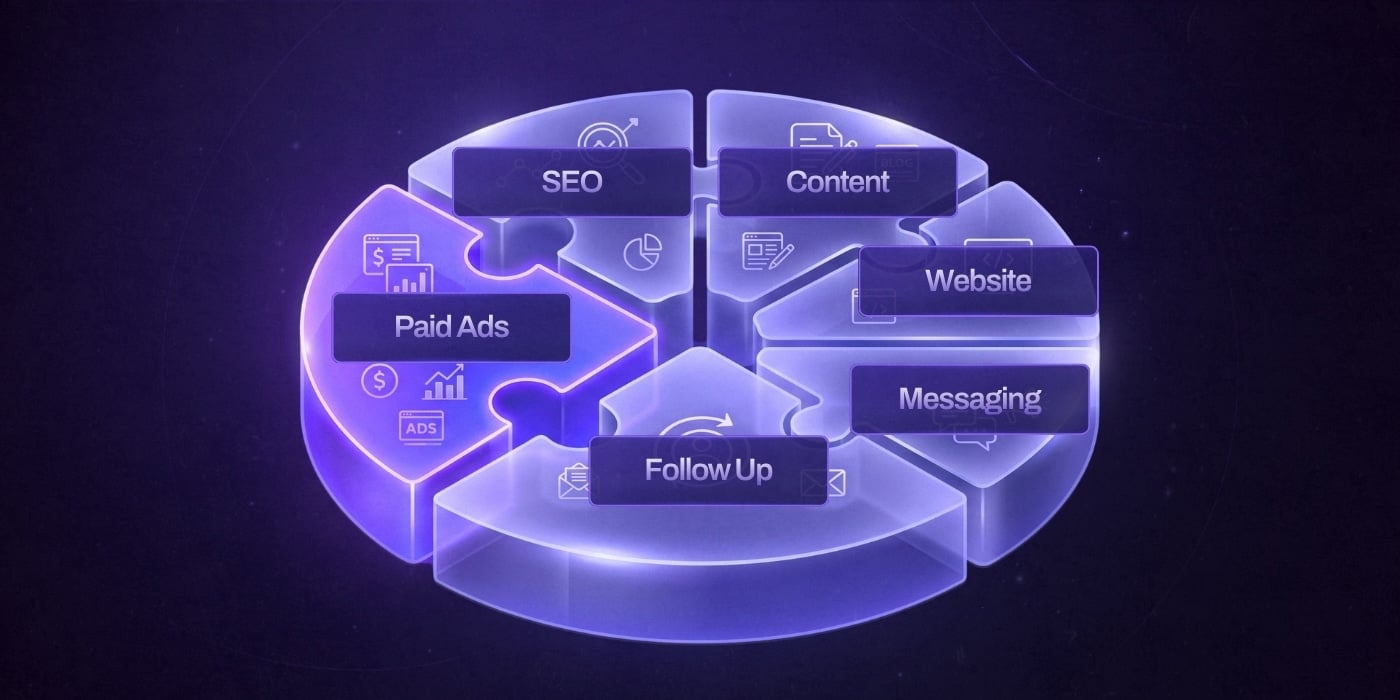
Paid ads can pull their weight in demand generation, but “bring us more business” is a pretty vague job description. To give your demand generation campaigns a useful role, you need to be clear about your target audience and what you’re asking those people to do next.
Ads Can Build Awareness or Reach People Already Looking
Some campaigns introduce your business to people who don’t know you exist yet. They might highlight a familiar frustration, share a useful resource, or introduce a solution that makes someone think, “Wait, we don’t have to keep doing this the hard way?”
In that case, paid media can help increase awareness and introduce your brand before someone has started actively comparing solutions.
Other campaigns reach people who are already comparing options and looking for help. Someone searching for a specific product or service is in a different headspace than someone discovering your company while scrolling through their social feed. One is actively looking for a solution, while the other wasn’t necessarily planning to add vendor research to their afternoon.
Both can contribute to demand generation, but they shouldn’t be expected to do the same job. An ad that helps someone understand a problem can build interest, while one that encourages an interested buyer to request a proposal can help turn that interest into action. What you ask people to do should make sense for where they’re starting.
That’s why treating paid ads as nothing more than a way to capture existing demand sells them short. They can help buyers find a solution they’re already looking for, but they can also help with creating awareness and give people a reason to start looking.
Buying Attention Isn’t the Same as Earning Confidence
A good ad can communicate your value, share credible proof, and make someone think, “Okay, this looks promising.” But the rest of the experience needs to live up to the introduction.
Once someone clicks, they shouldn’t have to play detective to figure out whether you can help them. What they find should answer their questions, address their concerns, and give them a next step that feels worth taking. You’ve earned a closer look, but you still need to give them a reason to stick around.
When those pieces don’t connect, it’s easy to keep tinkering with the campaign while the bigger problem goes untouched. A fresh headline might get more attention, but it won’t do much for buyers who still can’t understand your offer or see why they should choose you. At some point, the ad has done its job, and the rest of your marketing needs to hold up its end.
That’s why an effective demand generation strategy needs to look beyond the ad account.
Once you’ve earned someone’s attention, the next question is whether the rest of your marketing gives them enough reason to keep moving. That comes down to a handful of connected pieces: who you’re targeting, what you’re saying, how you’re educating buyers, where you’re showing up, what happens on your website, and how you follow through after that first interaction.
Get those pieces working together, and paid ads become one useful part of a much stronger demand generation marketing system.
Give the Right Buyers a Reason to Care
Before you start picking channels and planning campaigns, get clear on who you’re trying to reach and why they should care. Even perfect targeting won’t get you very far if your message leaves those people thinking, “That’s nice, but what does it have to do with me?”
Start With Their Problem, Not Your Campaign
Good B2B demand generation starts with understanding the companies you want to reach and the people involved in their purchasing decisions. Job titles, industries, and company sizes help narrow the audience, but your buyers have more on their minds than fitting neatly into your targeting filters.
You need to know what they’re struggling with, what they’ve already tried, and what would make solving the problem a priority.
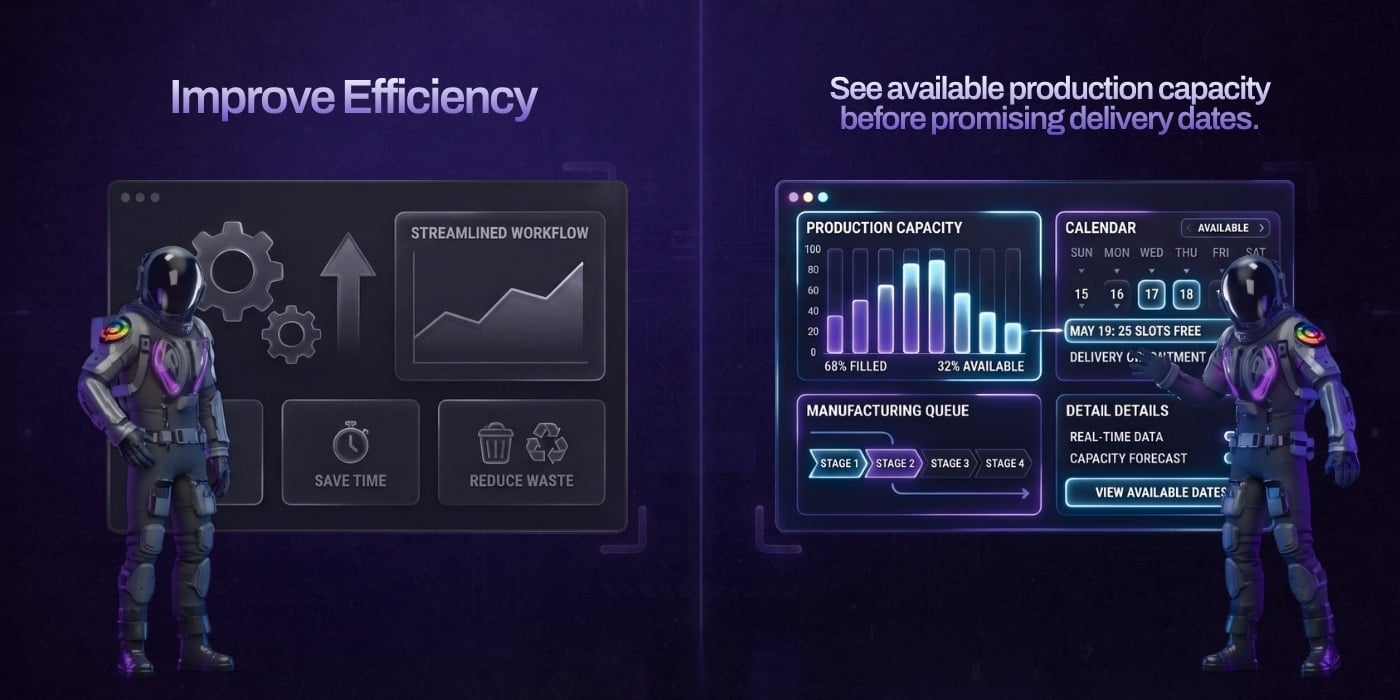
Take an operations director at a growing manufacturer. Knowing they’re responsible for keeping production on schedule gives you a starting point. Knowing their team keeps promising delivery dates without a clear picture of available capacity tells you what they actually need help with. There’s a difference between wanting things to run smoothly and wondering how you’re going to deliver everything someone has already promised.
With that context, you can talk about a situation they recognize instead of serving up another vague promise to “improve efficiency.” Your message becomes relevant to their working day, not just their job description.
To uncover those details, talk to customers and your sales teams. Ask what kicked off the search for a solution, which alternatives buyers considered, and what finally made them comfortable moving forward. Those conversations can uncover valuable industry insights and help you understand the decision behind the purchase, not just the person who signed off on it.
Make Your Value Clear Before You Promote It
Once you understand the problem, your brand messaging should make it painfully easy to see how you solve it.
Buyers need to understand:
- What you do
- Who it’s for
- Why it matters
- Why they should choose you instead of another option
And yes, “doing nothing and sticking with the current mess” counts as an option too.
Take a hypothetical scheduling software company. “Helping manufacturers work smarter” sounds nice, but it could mean just about anything. Explaining that the software helps teams see available capacity before promising delivery dates gives buyers something they can actually picture. Now they understand where the product fits into their day and why it might matter.
From there, the company can talk about the differences that help someone choose, whether that’s how the product works, who it was built for, or how painful implementation will be. Spoiler: buyers are usually wondering about that last one.
The goal isn’t to cram every feature, benefit, and differentiator into one heroic headline. It’s to give buyers a clear, believable answer to a much simpler question: “Why should I choose you?”
Help Buyers Understand the Problem
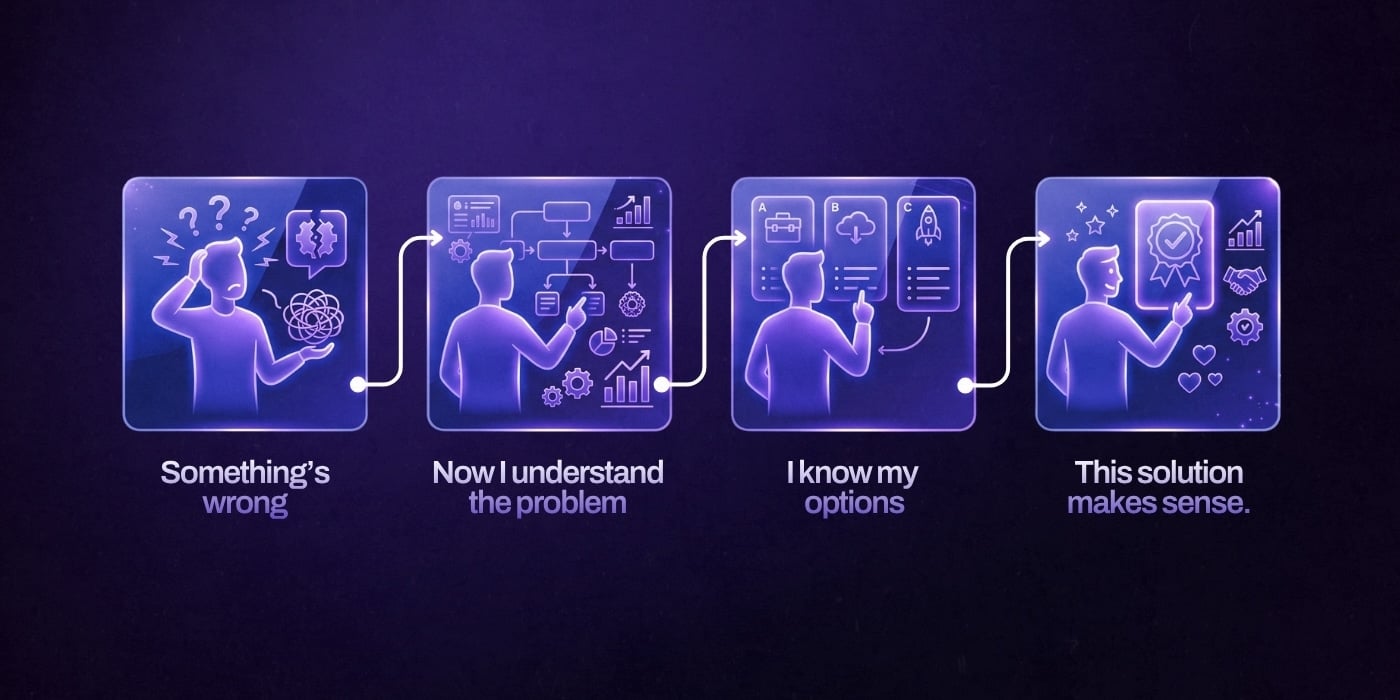
Once your message is clear, content marketing gives you the space to say what an ad or headline simply can’t.
It lets buyers dig into the questions they actually care about, understand the problem more clearly, and get a better feel for whether your solution makes sense for them. Best of all, they can do it on their own time, without having to book a call just to get the basics.
That matters because not everyone who’s interested is ready to talk to sales. Sometimes they need a little more context before they’re ready to make that leap.
Useful Content Does More Than Fill a Publishing Calendar
A content calendar can tell you when something is going live. It can’t tell you whether anyone will actually care.
The better place to start is with the questions buyers need answered. Different formats can help with different parts of the decision:
- Educational articles can explain why a frustrating problem keeps showing up.
- Comparison guides can help buyers weigh their options without opening twelve browser tabs.
- Case studies can show what happened when a company with similar challenges finally did something about it.
- Webinars, live events, and thought leadership can give complicated questions the room they need.
Each format earns its place when it helps someone move from “I’m not sure what to do here” to “Okay, now I understand my options.” Without that purpose, it’s easy to spend a lot of time creating content that technically fills the calendar without giving buyers anything new to work with.
You don’t need another article because Tuesday is looking a little empty. You need high-quality content because there’s a question worth answering.
Show Up Where Buyers Are Looking

Creating useful content and sharpening your message only gets you so far if the right buyers never come across either one.
Demand generation can happen across multiple channels, and each one can play a different role. Buyers might find you while searching for an answer, hear from you at an industry event, see a useful post on LinkedIn, or come across your brand through a trusted partner.
The point isn’t to turn every channel into an immediate lead machine. It’s to create useful opportunities for the right people to discover your business, build brand awareness, and remember you when a need becomes a priority.
SEO Helps You Show Up When Buyers Start Looking
SEO can play an important role in demand generation and inbound marketing because it helps your business show up when buyers are actively searching for answers.
And that doesn’t only mean targeting bottom-of-funnel searches like “best B2B software.” Buyers often start much earlier with questions about the problem itself, what’s causing it, or what their options are for fixing it.
SEO helps connect the useful content you’re creating with those searches. By understanding search intent and building visibility around topics your buyers actually care about, you can meet people while they’re researching instead of waiting until they already have a shortlist of vendors.
Over time, that visibility can contribute to organic traffic, brand familiarity, and qualified opportunities.
Ranking for a keyword is nice. Ranking for something your ideal customer actually cares about is a lot more useful.
Social, Events, and Partnerships Help Expand Your Reach
Search isn’t the only way buyers discover businesses worth paying attention to.
Social content can introduce useful ideas and reinforce your expertise. Webinars and industry events give buyers a chance to learn from you without committing to an immediate sales conversation. Partnerships can put your business in front of a wider audience that already trusts someone else in your space.
These channels can also work together instead of living in separate little marketing bubbles. A webinar might surface a question worth turning into an SEO article. That article can be shared on social, included in an email marketing campaign, or given additional reach through paid promotion.
You don’t need to be everywhere. You need to be useful in the places your buyers actually pay attention to.
And once those channels earn a visit, your website has an important job waiting for it.
Make the Website Carry Its Weight

Once someone lands on your website, the conversation shouldn’t suddenly fall apart.
Whatever got them there, whether it was an ad, an article, a search result, or a referral, should carry through into the experience they find next. This is where a promising first impression needs to turn into a much clearer understanding of what you do, why it matters, and whether you’re the right fit.
In other words, getting the click is nice. But your website still has to make the case.
The Ad Got Their Attention. Your Website Has to Earn the Next Step.
Imagine clicking an ad about reducing production scheduling delays and landing on a homepage that proudly declares, “Your Partner in Business Success.”
Great. But what does that actually mean?
There may be a perfect solution buried somewhere on the site, but now the visitor has to figure out what the company sells, whether it applies to their problem, and where the useful information is hiding. That’s a lot of detective work to hand someone who was only interested enough to click.
The page they land on should pick up where the campaign left off. If the ad speaks to a specific problem, the website should make it easy to understand how you solve it. Clear product or service information should explain the fit, while relevant proof helps back up the claims you’re making.
Navigation matters, too. Buyers shouldn’t have to guess which vague menu label might contain the answer they need. And once they find it, the experience still has to work on mobile, from the content they’re reading to the buttons and forms that help them move forward.
A polished design can make a strong first impression. It just shouldn’t force visitors to connect all the dots themselves.
Not Every Visitor Needs the Same Next Step
Some visitors are ready to talk. Others are still figuring out whether your service makes sense, looking for proof that you’ve solved a similar problem, or gathering information to send to the five other people involved in the decision.
Your website should make room for all of them instead of treating every visit like a now-or-never demo opportunity.
For someone still researching, a relevant case study or a clear breakdown of your service might be the right next step. Someone further along should be able to find a straightforward way to reach out and know what happens after they do.
That doesn’t mean turning every page into a choose-your-own-adventure packed with buttons. You can still have one clear primary action while giving people a useful way to keep exploring if they’re not ready to commit.
Good conversion strategy helps people make progress. If your only next step asks for more commitment than they’re ready to give, you probably haven’t sped up the decision. You’ve just made it easier for them to leave.
Keep the Conversation Going
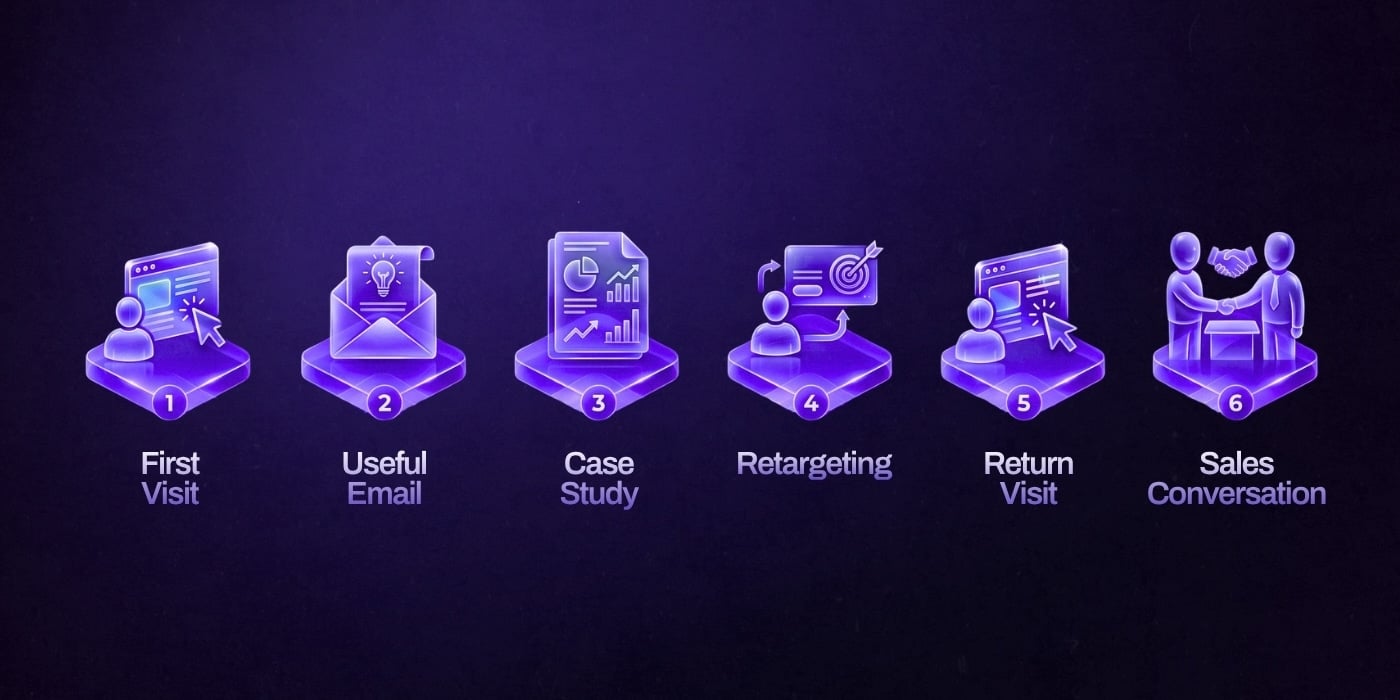
A promising first interaction doesn’t always turn into an immediate sales opportunity, and that’s normal.
Someone can be interested in what you offer and still have questions, competing priorities, budget hurdles, or a timeline that’s nowhere near “let’s buy this today.” Your strategy needs room for those people, too.
The goal isn’t to force every bit of interest into a sales call. It’s to stay useful long enough that when the timing is right, your business is still part of the conversation.
Interest Doesn’t Always Come With an Immediate Buying Timeline
Someone can see the value in what you offer and still not be ready to buy. They could need budget approval, input from a few colleagues, or a clearer plan for how the change would actually happen.
That doesn’t make their interest any less valuable. It just means your next interaction should match where they are instead of where you wish they were.
That’s where lead nurturing comes in. For people who’ve agreed to hear from you, email can keep the conversation moving with something useful. A webinar attendee might appreciate a deeper resource on a question that came up during the session. Someone thinking about implementation could get more from a customer story than another “here’s who we are” message.
Retargeting can help, too, especially when it gives people something relevant to come back for instead of following them around the internet with the same “Book a Demo” ad.
Nurturing leads is about staying useful while the decision takes shape. Asking “Ready yet?” over and over doesn’t make someone more ready. Giving them the right information might.
Marketing and Sales Teams Need to Agree on What Happens Next
Follow-up gets a lot easier when marketing and sales teams agree on what a qualified opportunity actually looks like and who’s supposed to take it from there.
At a minimum, both teams should be aligned on:
- Which companies are actually a strong fit
- What signals point to a real buying need
- When it makes sense to bring sales into the conversation
Otherwise, marketing can end up celebrating leads that sales has no idea what to do with.
When the handoff does happen, sales should get the context marketing already has. What did the person ask about? Which service caught their attention? Did they mention a specific challenge, or did they simply download something useful?
That information should flow both ways. Sales teams can tell marketing which objections keep coming up, which questions the website or content still isn’t answering, and what patterns they’re seeing in poor-fit inquiries.
That feedback helps you improve the process and make smarter decisions about future campaigns instead of blaming every stalled opportunity on weak follow-up. Sometimes the problem isn’t that sales needs to try harder. Sometimes the buyer needs a clearer explanation, a better example, or a more realistic picture of what your business can actually help them do.
Measure What Actually Moves the Pipeline
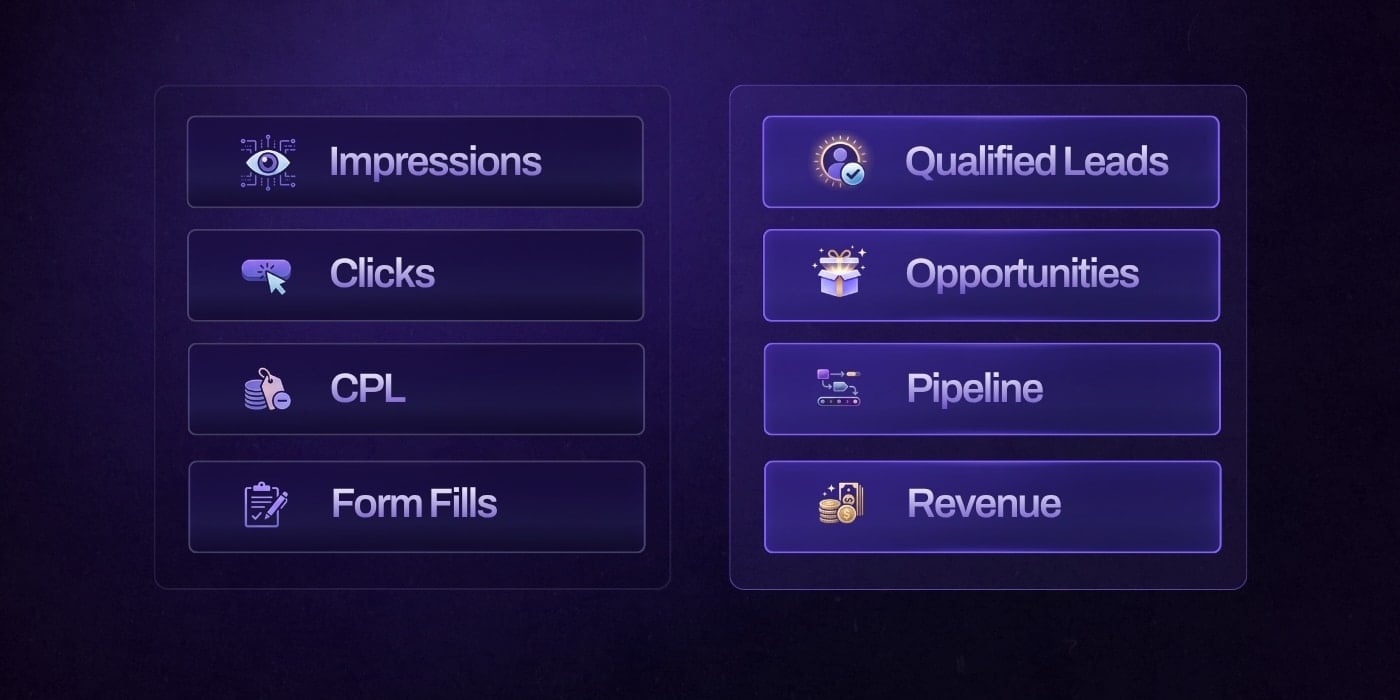
Campaign reports are great at telling you what happened inside the ad account. Clicks went up. Cost per lead went down. Everyone gets a nice green arrow.
But if you want to know whether demand generation is actually helping the business, you have to keep following the trail.
What happened after someone clicked? Did they find what they needed? Did they become a qualified opportunity? Did sales actually want to talk to them?
That’s where the more meaningful story starts.
A Cheaper Lead Isn’t Automatically a Better Lead
Imagine two campaigns with the same budget. One brings in 100 inquiries and turns two of them into qualified sales conversations. The other brings in just 40 inquiries, but eight of them are worth sales actually pursuing.
If you’re only looking at cost per lead, the first campaign might look like the winner. If you’re looking at what made it into the pipeline, the second one suddenly looks a lot more interesting.
You’d still want to see how those opportunities play out before declaring victory. But choosing a campaign based on lead volume alone can give you a very incomplete picture.
Clicks, impressions, and cost per lead are still useful. They can tell you how efficiently a campaign is running and where something may need attention. They just can’t tell you, by themselves, whether you’re attracting high-quality leads and better business opportunities.
A lower cost per lead is great. A lower cost per lead that actually turns into qualified pipeline is a lot better.
Connect Marketing Activity to Sales Opportunities
A more useful view of performance looks at three things:
- Who you’re reaching: Are your campaigns attracting the right people and giving them a reason to pay attention?
- What they do next: Are visitors exploring relevant services, reading supporting content, checking out case studies, or taking another meaningful step?
- What happens in sales: Which inquiries are actually a good fit, which become qualified opportunities, and which eventually turn into revenue?
That last part matters because B2B sales cycles aren’t exactly known for moving at lightning speed. A campaign that launched last week might already be generating promising activity, even if those opportunities haven’t had enough time to close.
Attribution deserves a little humility, too. A buyer might read an article, attend an event, come back through a search ad, and then finally reach out. The last click tells you how they arrived that time. It doesn’t tell you the whole story of what convinced them.
No single dashboard is going to explain the entire buyer journey. Combine the data you have with feedback from sales to understand what’s actually creating valuable opportunities and where your demand generation approach can improve. Ultimately, demand gen performance should connect marketing activity to qualified pipeline and revenue, not just traffic and lead volume.
What Should B2B Demand Generation Services Actually Include?

The right mix of B2B demand generation services depends on what your business actually needs and what your team already does well.
A good partner should be there to fill a real gap, not pile more activity onto an already busy marketing team. The point is to bring clarity to what’s missing, make ownership easier to understand, and strengthen the parts of your demand generation strategy that need the most attention.
In other words, hiring an agency should make the whole process easier to manage, not give you one more thing to manage.
A Demand Generation Agency Should Look Beyond the Ad Account
When you’re evaluating B2B demand generation services, the first question shouldn’t be “How many things do they do?” It should be “How does this help solve the problem we actually have?”
That work can cover everything from audience research and positioning to content marketing, SEO, paid campaigns, website conversion, lead nurturing, and reporting. But a longer service list isn’t automatically a better one. What matters is whether there’s a clear reason behind the recommendation and whether the right priorities are getting attention first.
A B2B demand generation agency also doesn’t need to own every piece of the puzzle. Your internal team or other partners may already cover certain areas well, and that’s fine. The important thing is knowing where one team’s responsibility ends and another begins.
A paid media specialist can do excellent work without owning your website, content strategy, or sales process. Problems start when everyone assumes someone else is handling what happens after the click.
Ask Who Owns the Gaps
Before choosing a B2B demand generation agency, ask a few practical questions:
- How will you determine whether our problem is awareness, messaging, conversion, or lead quality?
- Who is responsible for the website and content that support the campaigns?
- How will you connect reporting to qualified opportunities and feedback from sales?
The answers should make ownership crystal clear.
An agency can spot a landing page problem without being the team responsible for fixing it. That’s not necessarily an issue. The issue is when everyone walks away assuming someone else has it covered.
Clear ownership keeps important gaps from turning into forgotten tasks. It also makes the whole demand generation effort feel like one coordinated strategy instead of a bunch of separate services happening at the same time.
Your Demand Generation Strategy Should Do More Than Keep Ads Running
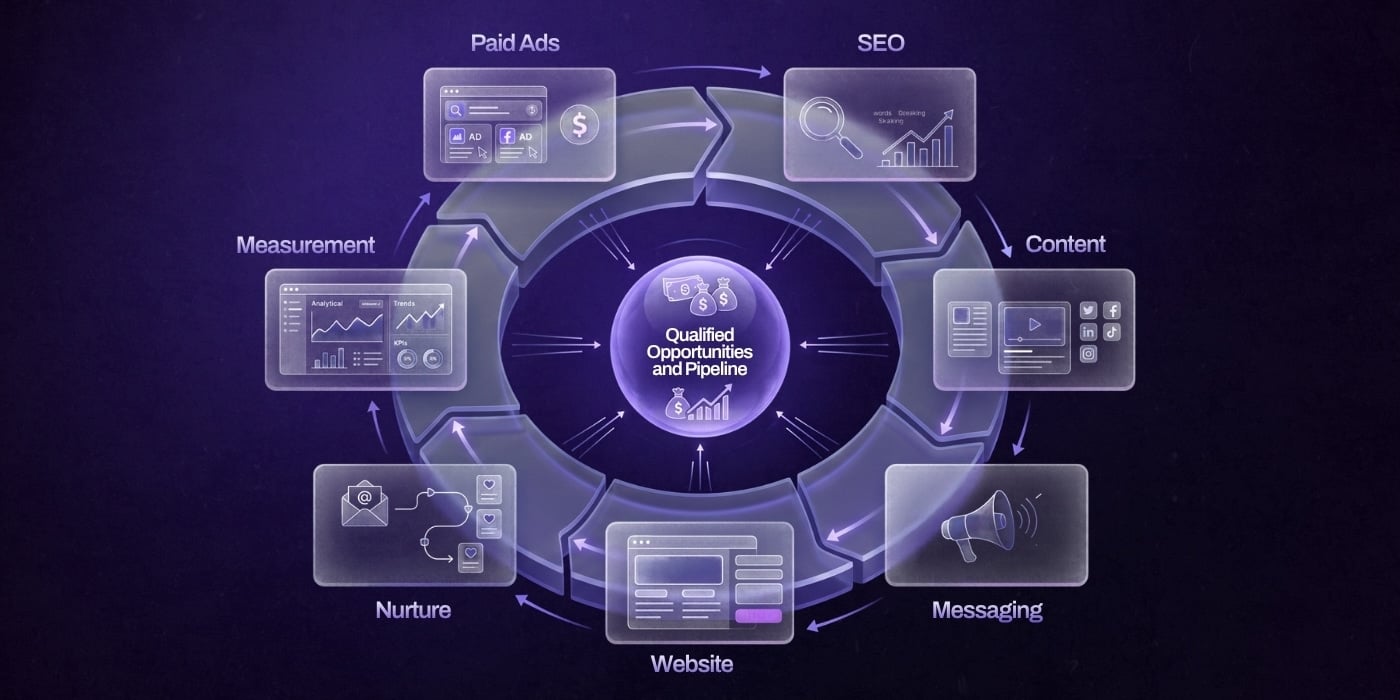
When your pipeline needs help, launching another campaign can absolutely be part of the answer. It just shouldn’t be the only lever your team knows how to pull.
More traffic only helps if the people you’re reaching have a clear reason to care once they get there. If they don’t understand what makes you different, can’t find the proof they need, or hit a dead end after that first interaction, sending more people into the same experience won’t suddenly fix it.
That’s what demand generation is really about. It brings the pieces together so your brand messaging, content marketing, SEO and distribution, paid campaigns, website, and follow-up all help buyers keep moving instead of making them start over at every step.
At Huemor, we help businesses strengthen several important parts of that equation, including paid ads, SEO, content, messaging, and the website experience itself. The focus is on helping the right people discover your business, understand its value, and have a clearer path toward taking action.
So before you put more money into getting people to your website, make sure you’re also getting more out of the attention you’ve already earned.
Website Improvement Plan
Build a Stronger Demand Generation Strategy
If your marketing is getting attention but not enough of that interest is turning into qualified opportunities, the answer isn’t always spending more on the same campaign. Sometimes the bigger opportunity is getting all the pieces working better together.
In a free strategy session, we’ll talk through your growth goals and look at how your paid ads, SEO, content, messaging, website, and conversion strategy are supporting them. From there, we can identify where you’re losing momentum and what could help turn more of the right attention into real opportunities.
Demand Generation FAQs
Expert Insights Contributed By...