Beyond The Launch
The Hidden Costs of Having No Real Website Support Post-Launch

-
Strategy
-
The Hidden Costs of Having No Real Website Support Post-Launch
Launching a new website feels like crossing the finish line. After months of strategy, design, website development, and rounds of feedback, the site is finally live. The forms work, the redirects are in place, and your team can move on to everything else that’s been competing for their attention.
Except there’s one small problem: your website isn’t actually finished.
Launch is really the first time your website has to perform in the wild. Visitors interact with it in ways you didn’t anticipate, your marketing team adds new website content, online platforms release updates, and third-party integrations change. Eventually, something that worked perfectly on launch day won’t work quite as perfectly anymore.
That’s where website support comes in.
Without ongoing support, most websites don’t suddenly fall apart. Instead, they gradually become harder to manage as small bugs get pushed to next month, website performance starts to slip, and website updates pile up. Before long, your team is relying on workarounds because addressing the underlying issues feels like more trouble than it’s worth.
Over time, those little compromises add up. The real cost of skipping post-launch support isn’t just the occasional repair bill. It’s the time, money, opportunities, and momentum you lose when preventable website problems are allowed to stick around.
And those costs can show up in more places than you might think.
Cost #1: Small Website Problems Turn Into Expensive Problems
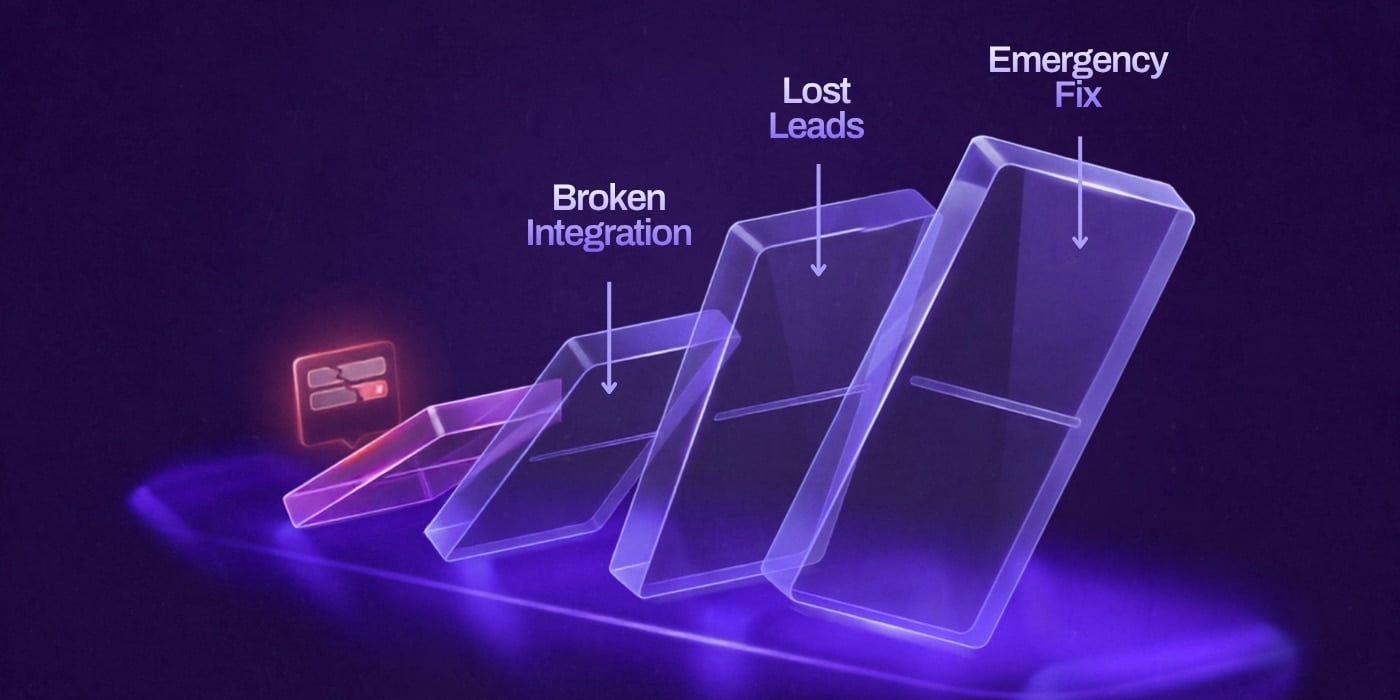
Most website problems don’t start as emergencies. They start as small annoyances that are easy to put off.
Maybe a form notification stops reaching the right person, a plugin falls behind on updates, or an integration starts acting strangely. You might also notice a web page looking a little off after a change or broken links starting to pop up where they shouldn’t.
None of those issues feel catastrophic in the moment, so they get added to a list and pushed behind more urgent work.
Then a few weeks go by.
Websites Rarely Break All at Once
Without regular website maintenance, small issues have a habit of hanging around long enough to become bigger ones.
Outdated software can eventually conflict with other parts of the site, while a minor display issue can spread across an entire page template. Even an integration that works most of the time can become a bigger problem if it eventually stops sending leads to your CRM altogether.
The longer those problems sit, the harder they can be to untangle later. What started as one simple issue can turn into a chain of maintenance tasks, testing, and troubleshooting.
That’s one of the biggest benefits of consistent site maintenance. Someone is actively keeping an eye on the website, addressing problems while they’re still manageable instead of waiting until they become urgent.
Keeping your website regularly maintained and up to date can also support search engine optimization by preventing technical problems from interfering with your search engine rankings.
Reactive Fixes Usually Cost More
There’s a big difference between fixing an issue during regular maintenance and discovering it after your sales team realizes leads haven’t been reaching the CRM.
One is planned work. The other derails everyone’s day.
Now your team has to figure out what happened, find someone with the technical expertise to fix it, test the solution, and determine what was affected while the problem was happening.
And that’s before you account for any missed leads, lost sales, or damage to customer trust.
So when you think about website maintenance cost or broader web maintenance costs, don’t just look at what you’re paying someone to maintain the site.
Look at what it can cost when nobody is.
Cost #2: Your Website Slowly Gets Worse Without Anyone Noticing
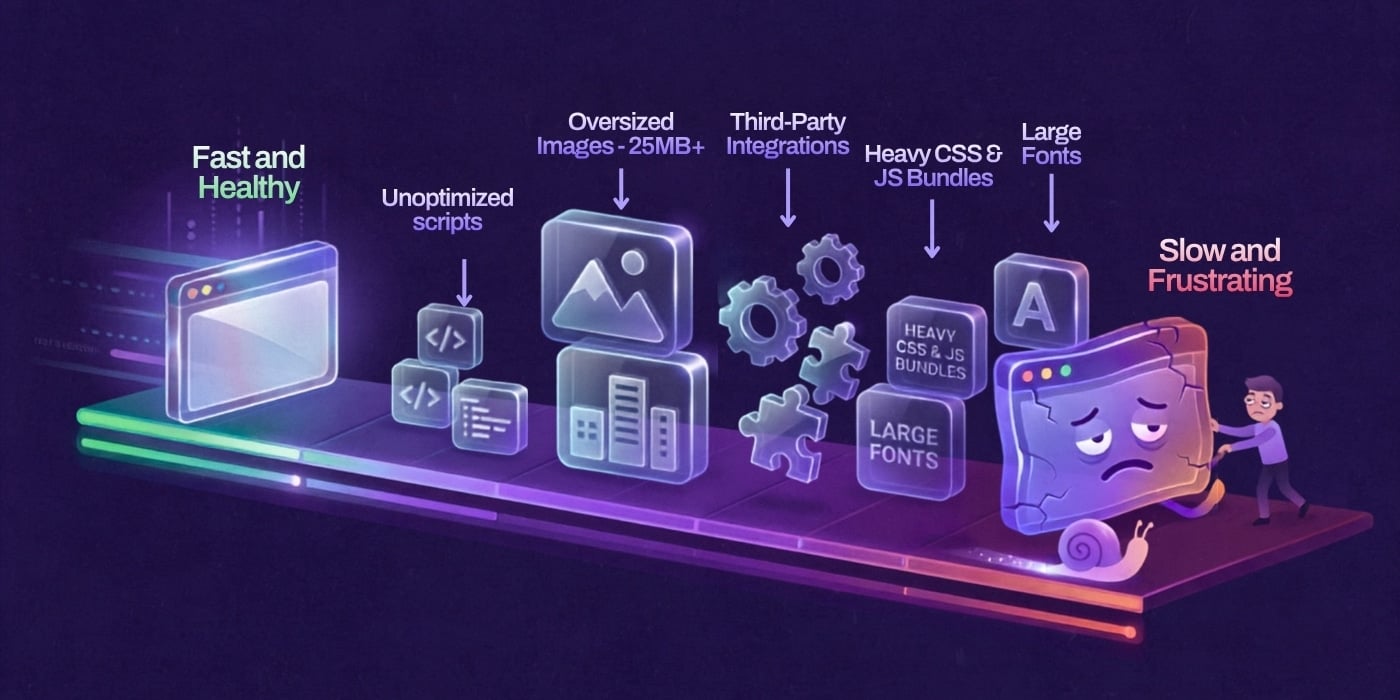
Performance slips a little at a time.
Your team adds another tracking script, marketing installs a new tool, and someone uploads an oversized image. Meanwhile, third-party integrations get heavier as new pages and functionality continue to be layered onto what’s already there.
Each change might only have a small impact on its own. But over time, those small changes can add up to noticeably worse website performance.
Performance Degrades Gradually
The tricky part is that your internal team may not notice right away.
You visit the site often, your browser may already have assets cached, and you know exactly where everything is. You may also be checking the site from a fast office or home connection rather than seeing what mobile users experience on mobile devices.
Your customers don’t have those same advantages.
They just know a page is taking too long to load, a button isn’t responding the way it should, or the mobile responsiveness feels frustrating. Poor website speed and page load speed can quickly hurt the website’s user experience, even when everything technically appears to be functioning properly.
And in most cases, visitors aren’t going to send you a note explaining what went wrong.
They’ll just leave.
Customers Notice Before You Do
Visitors don’t separate a website problem from a company problem. If your site feels slow, broken, or difficult to use, that experience becomes part of how they judge your digital presence.
That’s why proactive monitoring should be a core part of your website support services.
A reliable website monitoring service can provide uptime monitoring and performance tracking to help catch technical issues before they sit unnoticed for days or weeks. Good web monitoring gives your team a chance to address problems and make performance improvements before they start affecting more visitors.
Cost #3: Security Problems Get More Expensive the Longer You Ignore Them

Your website’s technology doesn’t stop changing once the site goes live.
Content management systems release software updates, integrations evolve, and new security vulnerabilities are discovered that require patches. Even when you’re not actively making changes to your website, the technology behind it continues to move forward.
Your site has to keep up.
Your Website's Technology Doesn't Stand Still
Most modern websites rely on several systems working together behind the scenes. That can include your content management system, web hosting environment, custom development, analytics tools, third-party integrations, and other software your site depends on.
Keeping those systems current helps maintain security, stability, and compatibility, but security updates and other changes still need to be handled carefully.
Simply installing every available update without testing can create new problems just as easily as ignoring updates altogether.
Good website maintenance means changes are managed, tested, and backed up so issues can be caught early. The goal is to keep the site secure and stable while reducing the chances that one neglected component turns into a much larger problem.
Security Incidents Cost More Than the Repair
When security is neglected, the impact can go well beyond whatever it costs to clean up the website. According to the IBM Cost of a Data Breach Report 2026, the global average cost of a data breach reached a record high of $4.99 million, a 12% increase from the prior year.
A compromised site can lead to:
- Downtime
- Lost leads or sales
- Damaged customer trust
- Compromised information or data loss
- Search visibility issues
- Hours of internal troubleshooting
- Emergency development costs
That’s why proactive website security services and appropriate security measures are an important part of post-launch support.
Regular updates, backups, monitoring, and security checks can’t guarantee zero downtime or that a website will never run into a problem. Nothing can. But they can reduce unnecessary risk, support disaster recovery, help keep your site secure, and put your team in a much better position to respond quickly if something does happen.
Cost #4: Your Marketing Team Becomes Your Website Support Team

When nobody clearly owns website support, the work doesn’t disappear.
It just lands on someone else’s plate.
More often than not, that someone is on the marketing team.
Someone Still Has to Handle the Website
A marketing manager notices a form isn’t working and spends an hour troubleshooting it. A coordinator tries to figure out why a page looks strange on mobile. Someone pulls in IT to investigate a technical issue. Another person starts digging through old emails to find the freelancer who built a feature two years ago.
None of those requests may seem especially costly on their own.
But over the course of a year, they add up. Before long, your marketing team is spending a surprising amount of time on website management and maintenance tasks for the very tool that’s supposed to help them move faster.
“We’ll Handle It Internally” Isn’t Free
Handling website issues in-house can feel cheaper because there isn’t an invoice attached to every request.
But your team’s time still has a cost.
More importantly, it has an opportunity cost.
Every hour your marketing director spends troubleshooting a website problem is an hour they aren’t spending on digital marketing strategy. Every afternoon a demand generation specialist spends fixing a landing page is time they aren’t spending improving the campaign behind it.
That belongs in the website maintenance cost conversation, too.
Professional website maintenance services don’t just give you access to technical expertise and technical skills. They give your team back the time to focus on the work they were actually hired to do.
Cost #5: Website Updates Become Harder Than They Should Be

Your website may have launched, but your business didn’t stop changing.
As your business evolves, you’ll add new products and services, refine your positioning, and publish fresh case studies and blog posts. At the same time, campaigns will need new landing pages, sales will need updated resources, and leadership may have new initiatives they want to promote.
Your website has to keep pace with all of it.
Your Business Keeps Moving
Without reliable support, even simple website updates can start to feel like projects.
- Who knows how to build the page?
- Can marketing make the change safely?
- Will updating this template affect something else?
- Who built that integration in the first place?
What should have been a quick update gets delayed until someone has the time, confidence, or technical know-how to deal with it.
Sometimes that means outdated web content stays live longer than it should. Other times, marketing works around the website instead of using it the way they intended.
Neither is a great sign.
Slow Updates Create Marketing Bottlenecks
Your website should help your marketing team move faster, not become another thing they have to work around.
If campaigns are regularly waiting on website changes, sales is sending prospects to outdated pages, or your team avoids making improvements because the CMS is too difficult to manage, the site is becoming a bottleneck.
Good website support helps prevent that.
Your team should be able to handle routine changes confidently, while knowing there’s a trusted partner available when something requires more technical expertise.
The easier your website is to update and evolve, the more useful it becomes as your business and business goals change.
Cost #6: You Lose Opportunities to Make the Website Better

Preventing problems is important, but there’s another cost of having no post-launch support that’s much easier to miss:
Your website never really gets better.
Maintenance and Optimization Aren’t the Same Thing
Website maintenance keeps things working.
Performance optimization asks whether they could be working better.
Once your website is live, you finally get to see how real customers interact with it. User behavior can show you which pages hold their attention, where they drop off, which calls to action get clicks, where forms lose people, and what content brings in qualified visitors.
That kind of information is incredibly valuable. But only if someone is actually using it.
Your Visitors Are Giving You Answers
Analytics, heatmaps, conversion data, search performance, and feedback from your sales team can uncover opportunities that were impossible to see before launch.
Maybe visitors aren’t reaching an important section, or a high-traffic service page isn’t generating enough inquiries. You might also notice people starting a form but never finishing it, while your sales team keeps hearing questions the website should already be answering.
Those insights can lead to better messaging, clearer calls to action, stronger content, improved layouts, speed optimization, and a smoother user journey.
They can also inform your SEO strategy. Technical problems, outdated content, and a poor user experience can make it harder to improve organic traffic, search rankings, and your site’s ranking in the search engine results pages.
Without ongoing website support services, though, those opportunities often stay buried in a dashboard instead of turning into meaningful changes.
The Cost Isn’t Only What Breaks
That’s one of the biggest differences between reactive support and a real post-launch partnership.
Reactive support asks, “What’s broken?”
Good support also asks, “What could be better?”
Ignoring that second question can be expensive in ways that are harder to see.
A conversion improvement you never make doesn’t show up as a line item on your P&L. Neither does the search engine optimization opportunity you missed, the friction you never removed, or the campaign that could have performed better with a stronger landing page.
But those missed opportunities still have a cost.
Cost #7: Eventually, You Pay to Fix Years of Neglect

Put off enough small updates and fixes, and eventually they start stacking up.
That’s technical debt. And like most debt, it tends to get more expensive the longer you ignore it.
Technical Debt Adds Up
Over time, a website without consistent website maintenance can accumulate:
- Outdated software and dependencies
- Inconsistent templates
- One-off fixes and workarounds
- Abandoned integrations
- Bloated code
- Old or duplicated website content
- Missing documentation
The problem is that these issues rarely stay isolated. One workaround becomes the foundation for the next, and before long, even simple changes come with a lot of uncertainty.
Your team isn’t just asking, “Can we make this update?”
They’re asking, “What else might break if we do?”
A Website Can Age Faster Than It Should
This is often the point when website owners decide their site is simply “old.”
Sometimes that’s true. But other times, the site hasn’t reached the end of its useful life. It just hasn’t been properly maintained.
A website that could have continued supporting the business with regular website maintenance services becomes so difficult to update, troubleshoot, or improve that another redesign or rebuild starts to feel like the only practical option.
Now you’re paying for another major website development project sooner than you should have needed to.
Ongoing maintenance isn’t just about keeping your website working today. It helps protect the investment you’ve already made and keeps the site useful for longer.
What Should Website Support Actually Include?

Not every business needs the same level of support. Maintenance depends on the size, complexity, and role of the website within the business.
A relatively simple marketing site will have very different needs than a large B2B website with custom functionality, integrated solutions, and several internal teams managing content.
But regardless of complexity, good website support services should be proactive. You want a team that’s keeping an eye on your website and helping you maintain it, not just an email address you contact when something catches fire.
Depending on your website, that support might include:
- CMS and software updates
- Security monitoring and security updates
- Automated backups and disaster recovery planning
- Uptime monitoring
- Website speed and performance monitoring
- Bug fixes
- Cross-browser and mobile device testing
- Content and website updates
- Technical troubleshooting
- Integration support
- Analytics and performance tracking
- Ongoing UX and performance improvements
The exact list will vary, and that’s okay. What matters more is having clear ownership behind it.
Someone should know what’s being monitored, what needs regular attention, who’s responsible for handling it, and what happens when something goes wrong. That’s what turns website maintenance services from a collection of tasks into actual support.
Ask Who Owns What
Before hiring a website support partner, get specific about what they’ll actually be responsible for.
A few questions worth asking:
- Who monitors the website?
- How quickly are critical issues addressed?
- Who handles software updates and security patches?
- What happens if an update causes a problem?
- Are backups being created, and can they actually be restored after data loss?
- Who responds to a security incident?
- Can the team help improve the website, or do they only handle bug fixes?
- How are support requests prioritized?
A good support arrangement should make those answers clear from the start.
The last thing you want is to discover during an emergency that something you assumed was being handled was never actually anyone’s responsibility.
Website Maintenance Cost vs. the Cost of Doing Nothing

It’s easy to look at a monthly maintenance plan and see another expense. The price is right there on the proposal, while the cost of doing nothing is much harder to spot.
But that’s not really a fair comparison.
The true website maintenance cost includes what can happen when ongoing support isn’t there. Emergency repairs, downtime, lost conversions, security incidents, hours of employee time, delayed campaigns, missed optimization opportunities, and even having to rebuild your website sooner than expected can all add up.
There’s also the upside to consider. Ongoing maintenance can help uncover opportunities to improve website performance, user experience, and conversions over time. That makes website maintenance services less about paying to keep the lights on and more about giving your site’s performance the opportunity to improve over time.
When evaluating website maintenance cost, it’s worth looking beyond the monthly fee and considering the business impact of keeping your website functioning properly.
One option comes with a predictable price.
The other has a habit of sending you the bill when you least expect it.
Your Website Should Get Better After Launch, Not Worse
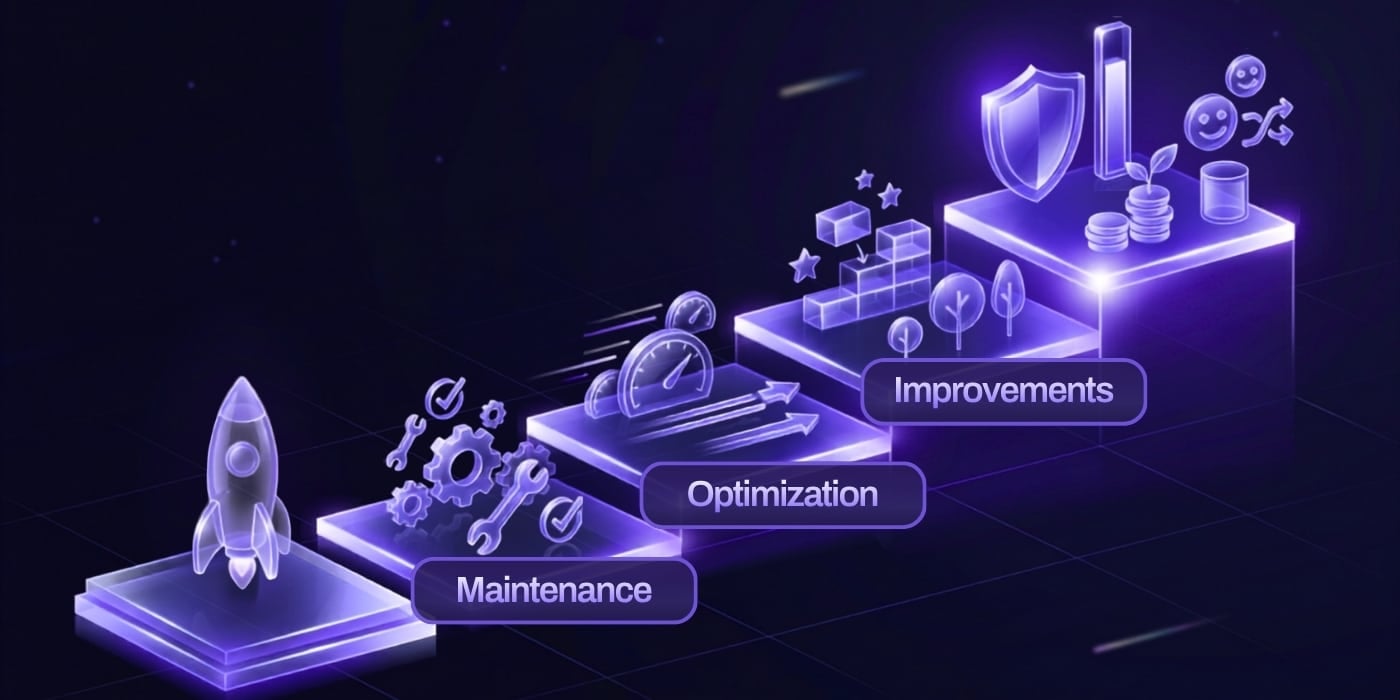
Launch day should be the beginning of your website’s most useful years, not its best day.
Your business will evolve, your customers’ needs and user expectations will change, and your marketing strategy will mature. Technology will keep moving forward, too. Most importantly, real visitors will show you things you couldn’t have known while the website was being designed.
Your website should be able to evolve right along with all of it.
A user-friendly website that generates leads, supports your marketing team, communicates your value, and gets better based on real customer behavior is a valuable part of your digital presence and your brand’s success.
A website everyone is afraid to touch because nobody knows what might break next? That’s a liability.
So when you’re deciding whether post-launch support is worth the investment, don’t just ask what website maintenance costs.
Ask what going without it could already be costing you.
Website Improvement Plan
Build a Website That Keeps Working
If your current website isn’t generating the leads, trust, or momentum your business needs, better maintenance can only take you so far. Sometimes, you need a stronger foundation.
In a free strategy session, we’ll talk through your business goals, review your current site, and identify where a redesign could improve its performance. And once your new site launches, our ongoing website support can help keep it performing at its best.
Website Maintenance FAQs
Expert Insights Contributed By...